


From 0 to 30,000 Stores
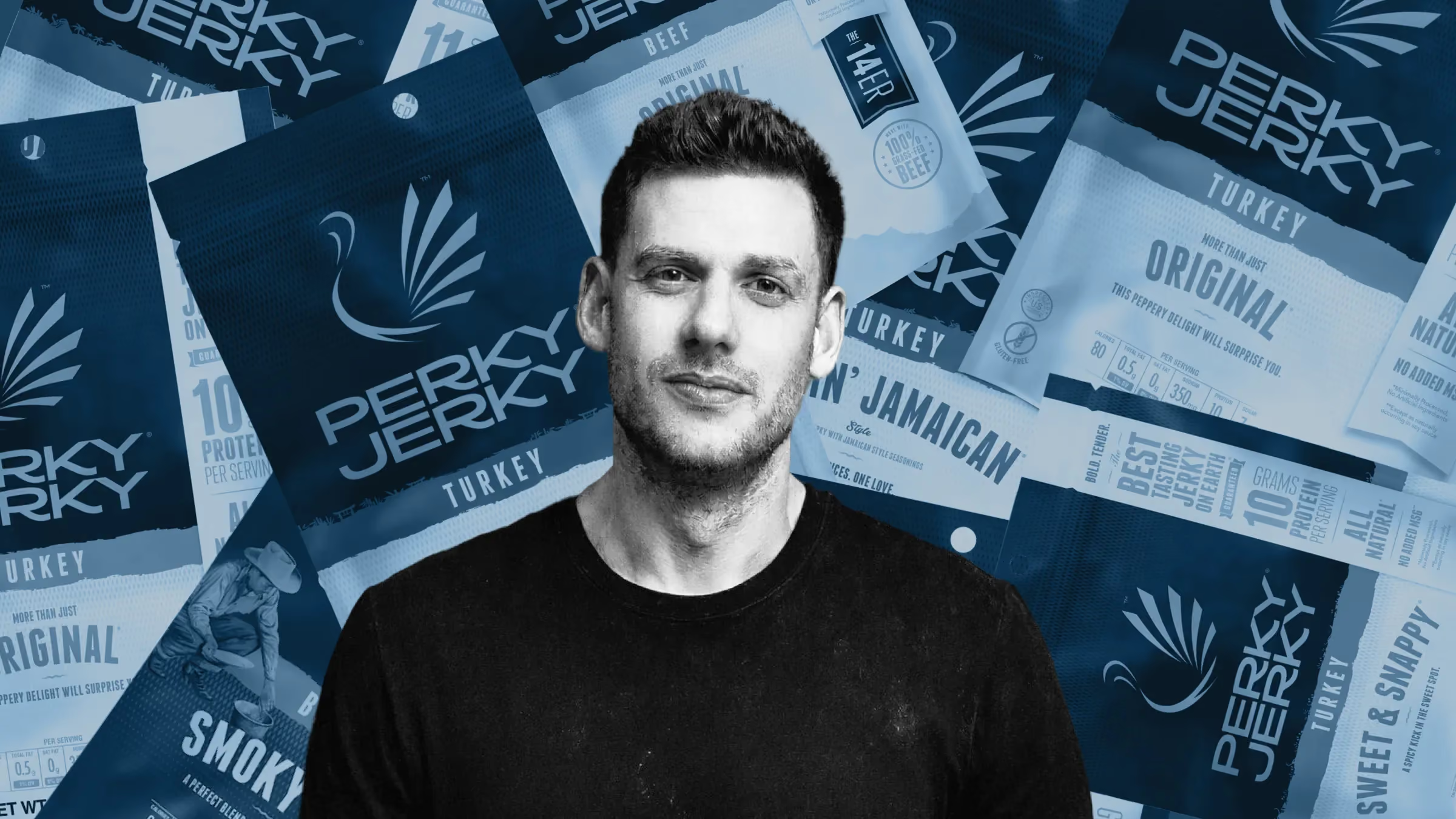
I spent a decade helping build Perky Jerky from 0 to 30,000 stores.
As employee #1, I was responsible for building retail. We had no national broker network helping us reach buyers and cover accounts. No inventory sitting in distributor warehouses across the country. No buyers calling because someone else had already taken a chance on us.
We had a product, a story, some shiny packaging, and a belief that premium jerky could carve out space in a category dominated by legacy brands.
Over the next decade, we raised millions of dollars, sponsored a NASCAR team, and helped bring female consumers into a category that had historically been marketed almost exclusively to men. For retailers, the value was bringing in shoppers who hadn't been buying the category.
We got a lot right. We also spent too much time believing we could outwork problems we should have solved differently.
We thought nobody could sell the brand better than us. We knew every detail, cared about every account, and were willing to do whatever it took. That confidence helped us get started. It also made us slow to admit we needed people who could cover ground we couldn't.
While we were learning retail by brute force, competitors were building broker networks. They had people who knew the buyers, understood the accounts, and could keep things moving without a founder in every conversation. They weren't waiting to become experts in every account themselves. We were.
Across 17 years in CPG, I've helped drive hundreds of millions of dollars in retail sales and worked alongside some of the industry's leading challenger brands. I've watched founders burn months chasing one buyer when the real problem was everything behind the pitch. Retail is a system.
The right introduction can get you a meeting. It can't make your pricing work, put inventory in the right warehouse, or get the product reordered. Those pieces have to connect. When they do, each account helps you earn and support the next one, and you stop having to force every inch of growth yourself.
A DTC founder can arrive with strong repeat purchase, great reviews, and customers who tell everyone about the product, then spend six months wondering why retail isn't moving. The demand may be real. The job is making it work through a retailer's business, where you don't control the shelf, the shopper experience, or every decision between the factory and checkout.
The Biggest Misconception in Retail
Most founders start with distribution. How do I get into Target? Kroger? Costco? How do I get my products into the major distributors?
Fair questions. But knowing the buyer and having something the buyer can buy are two very different places to be.
Retailers need new products that grow their categories and bring shoppers into the aisle. They also have limited space, margin targets, review calendars, and a long list of brands making the same pitch. Adding your product usually means removing something else. The buyer has to defend that decision.
Tell your story. Buyers want to understand who's behind the brand and why someone would choose it. But no category manager ever asked me how passionate I was about jerky. They wanted to know whether it would sell.
A brand doing $5M online may already have useful answers. Repeat purchase, subscription behavior, Amazon performance, and customer reviews can explain who's buying and why. Don't leave that information in your DTC dashboard while your retail deck talks about passion.
Retail is a dialect. “Our customers love us” becomes a conversation about which shoppers you bring in, what they currently buy, and how your product fits into their lives. If you're claiming a new occasion or an underserved customer, explain what you've actually observed. “Incremental” gets used in a lot more decks than it gets supported.
Then show the economics: everyday margin, penny profit, distributor costs, and promotional pricing. Explain the support you're prepared to fund. The category manager should be able to see how your brand makes them money and what you're bringing to the launch beyond enthusiasm.
Nothing Is Harder Than Selling Potential
Career CPG people love to say getting on shelf is the easy part and staying there is the hard part. Usually people who joined once the brand was already doing millions.
I've never bought that. Go convince a buyer to remove a product with a sales history and replace it with your forecast. Then tell me that was the easy part.
You have no retailer sales history, regional velocity, or distributor inventory ready for the next banner to order. The buyer may never have heard of you. An established competitor can point to years of sales and reliable supply. You're asking someone to believe a forecast.
“People love the product once they try it” doesn't give them much to evaluate. “Repeat purchase is X%, Amazon sales over the last 52 weeks are X dollars, and our first 30 independent retailers are reordering within two weeks” gives them something to work with.
You can't manufacture a retail track record overnight. You can stop giving the buyer reasons to doubt whether you're ready. Keep spec sheets, dimensions, case packs, pricing, minimum orders, UPCs, nutritional panels, and product renders organized. Have insurance documents accessible and sample kits ready to rip. Nobody should need three internal emails to find the case dimensions.
At least half of retail is not screwing up the basics. Imagine spending six months getting a yes and then stalling over item setup, insurance requirements, facility audits, or EDI. That's the system used to exchange purchase orders, invoices, and shipment notices electronically. Figure out what's required before a launch deadline forces the issue.
Packaging belongs here too. Your full e-commerce funnel is not sitting next to the product at Kroger. The package needs to communicate what it is and why someone should care, often from five feet away in about five seconds.
A shopper owes you none of the patience your friends gave you when you explained the concept. Good packaging can earn attention before your sales earns it, while confusing packaging can waste a product that deserved a real shot.
Retail Is a System
Every account should make the next account easier. If you're starting from zero with every buyer, look at what your existing business is actually doing for you.
A regional retailer says yes and commits enough volume for a distributor to bring in the product. Once inventory is available, other accounts supplied by that warehouse become easier to service. Results from the first stores give another buyer a reference point and give your broker something concrete to pitch.
The next conversation starts with fewer unknowns. You can explain where the product sells, how it performs, and how another retailer would receive it. Your team also knows what supporting a launch takes.
A boutique account might give you cultural credibility, content, and access to a specific shopper. That can be worth paying for. But the next grocery buyer may see very little connection between that account and their own stores. Understand what the win proves before you build the next pitch around it.
King Soopers in Colorado is a Kroger division, giving a regional launch a potential path to broader distribution. Strong performance there gives you relevant results to discuss when pursuing other Kroger divisions. You still have to earn the expansion, but you're making an informed ask.
Before pursuing an account, consider the distributor, geography, sales coverage, and whether the results will mean anything to your next key account. A group of stores you can support well may be worth more than scattered doors that cost a fortune to service. Being authorized in a distributor warehouse also means very little if no accounts are pulling product through it.
Brokers provide the coverage that helps this work across more accounts. A good broker understands review windows, promotional submissions, item setup, and the people involved in moving the business forward. You're paying for account knowledge and coverage you would otherwise have to build the hard way.
Find out who will actually manage your business, which competing brands they represent, and how much attention your brand will get. You need to matter to the person managing the account. Being the smallest, least supported brand on a prestigious roster won't get much done.
The brand still owns the strategy: where to launch, at what price, and with what support. Give the broker current materials, a clear account plan, and timely decisions. A broker can't build momentum while waiting two weeks for the brand to approve a price.
Retailers Buy Evidence
Most brands spend too long in “did you get my samples?” purgatory. The box goes out, the founder follows up, and then follows up again. The buyer has nothing new to consider.
Make the next email worth opening. Tell the buyer a regional retailer accepted the line, independent stores reordered, or online sales grew. Pick something relevant to their account. Rewording the same ask isn't an update, even if you put a different subject line on it.
An update might sound like this:
“Over the last 12 weeks, Amazon sales grew 38% to $200k, and our site is pacing toward $5M this year. I've attached the customer breakdown, including the younger female shoppers we discussed targeting in your category.”
Or, when customer activity matters more:
“We're seeing customers share how they use the product across TikTok and Instagram, especially for the afternoon occasion we discussed. I've linked a few examples below so you can see the use case and who's responding.”
Use your own numbers, and give the buyer enough context to judge them. If you're talking about social traction, link to the posts. If you're citing growth, name the period and include the dollars. “Up 500%” means something different when you started at $100. The buyer knows that too.
Stay on their radar without making your impatience the subject of every email. A buyer who passed three months ago may have a different view once the business has changed. Give them something worth reopening.
The Retailer Meeting
You worked hard to get the meeting. Don't spend it narrating the deck.
Founders can burn half a 30 minute meeting on how the company started. By the time they get to pricing and support, the buyer is checking the clock. Your origin story deserves a place. It doesn't deserve the time you need to work out an actual launch.
Here's a useful starting point:
- 5 minutes on the founder and brand
- 5 minutes on the product and what it adds to the category
- 5 minutes on sales and customer evidence
- 15 minutes on the retail plan and buyer questions
Give them enough of the story to understand the company and care about the product. Then explain what it adds to the current assortment and show the results that support your case. You already earned the meeting with some of that information, so don't bury the buyer in every metric you have.
Spend the remaining time on everyday and promotional margins, distribution, the full year support calendar, and operational readiness. Be clear about what you can commit to and what you still need to resolve. Don't promise a national campaign when the budget covers a handful of demos. A buyer can work with an honest plan.
Treat the timing as a guide. Some buyers want to discuss margin immediately. Others will spend ten minutes on the product. Let them talk. A founder determined to finish every slide can miss the part where the buyer is telling them how to win the business.
The Ecosystem Will Start Working For You
Early retail is a grind. You're handling introductions, samples, submissions, and buyer meetings while explaining the brand from scratch. Once the product lands, you have a much more useful question to answer: is it selling?
Retail calls it velocity, usually measured in units per store per week. The launch announcement gets old quickly. This is the number you'll be discussing at the next review.
Velocity forgives all sins. A buyer has more patience when a product is moving and shoppers keep coming back. You have room to adjust the promotional plan or work through a launch issue because there's a business worth protecting. Door count alone won't earn you that patience.
Look at what's happening inside the stores before chasing the next thousand. Is the product on shelf? Is the tag correct? Are out of stocks interrupting sales? Did the promotion run?
As the brand performs, more people have a reason to put effort behind it. A broker has results to pitch. A distributor has demand to service. A buyer has an account they can reference. Meetings start with some familiarity, and expansion becomes a discussion about an existing business instead of another bet on potential.
The costs grow too. Retail is blood in, blood out. Brands can fund their way onto the shelf through slotting, free fills, and launch support, then fund their way off through markdowns if the product doesn't work.
Build those costs into the plan. Review the account after allowances, freight, broker costs, and ongoing support. Watch deductions and inventory as you expand. A slow product in 5,000 stores is a much more expensive problem than a slow product in 50.
The Next Breakthrough Brand
One of the laziest takes in CPG is that a category is too crowded. Protein, energy, hydration, snacks. Depending on who you ask, everything worth building has already been built.
Retailers reset categories, discontinue products, and look for new ways to bring shoppers in. Consumers change what they buy and how they use it. The brands on shelf today still have to earn their space next year.
The opening might be an overlooked shopper, a more useful format, or an occasion the category doesn't serve particularly well. Sometimes a brand understands a customer better than the established players do. Whatever the opening, people need a reason to try the product and a reason to buy it again.
There are only hard categories and harder categories, no easy categories. Being in a crowded one doesn’t mean you picked the wrong fight.
One day the brand that looked too small starts looking inevitable.
The retailer has a reason to expand it.
The broker has a reason to push it.
The distributor has a reason to carry it.
The shopper has a reason to come back.
That is how breakthrough brands are built.
The brand found the seam, created real demand, and learned how to make the retail system work behind it.
No category is too crowded for that.
The shelf is never finished!
Go build.

Get the best in intelligence to your inbox.
- Operator insights on the tactics and systems driving modern e-commerce growth.
- Clear analysis of the shifts shaping modern e-commerce.
- Unfiltered conversations with the people actually building great brands.
Your submission has been received!
Create a free account to continue reading
Get access to intelligence from e-commerce's top operators with a free Starters account.
Continue reading with a Starters subscription
Get unlimited access to The Starters` exclusive reporting and ad-free intelligence for just $249/month