

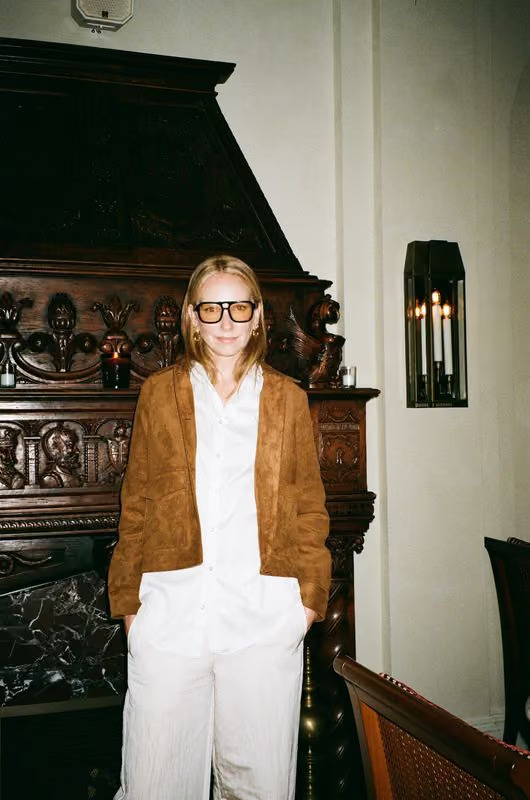
Emily Cody is a brand consultant, advisor and writer who has spent her career shaping brand at companies like Maude and Ted Baker, as well as being an accomplished writer with bylines in Architect's Digest.
A while ago award winning writer Emily Sundberg posted a poll asking if most brand events are bad and I could not hit “yes” fast enough. Which is funny because people are craving experiences right now. Everyone says they want community, connection, third spaces, reasons to leave the house. But somehow so many brand events still feel weirdly hollow. Like networking with candles.
The format is typical. A downtown venue. A branded cocktail. Maybe a neon sign with some phrase about empowerment or creativity. A room full of people half talking to each other, half making content about being there. Everyone posts the same Story within like 20 minutes and then quietly leaves with a gift bag before the thing is even really going.
Everything has been optimized for content capture but nobody has thought particularly hard about whether people will actually enjoy themselves
For a long time this worked or at least worked enough. Brands basically treated experiential like a content machine. Invite attractive/cool/internet people, make the room aesthetically pleasing, hope the content travels. The actual experience almost became secondary to proving online that the event happened.
But consumers are far more fluent in marketing now than they were even five years ago. Everyone understands the mechanics. Everyone knows when something exists purely for Instagram Stories. And a tote bag and a free spicy margarita are not community.
The funny thing is experiential matters more now than it did during peak influencer era. Paid media is expensive, CAC is brutal, nobody trusts ads, performance marketing is shaky, and every founder is realizing you can’t optimize your way into becoming culturally relevant forever.
So naturally brands are trying to invest more in IRL experiences again. The issue is most of them are still using a 2019 playbook. A lot of events feel designed entirely around optics instead of energy. You can feel it the second you walk in somewhere. Everything has been optimized for content capture but nobody has thought particularly hard about whether people will actually enjoy themselves once they’re there.
Pro tip: most people can tell immediately when they’re being treated like distribution channels instead of guests. The best events I’ve gone to recently have actually been pretty simple. A live music set in a store. Small dinners where the guest list actually made sense together. Workout classes where nobody was aggressively filming themselves the entire time. Things that felt social in an actual human way.
Hospitality is the difference I keep coming back to. People remember whether a room felt good. Whether they met someone interesting. Whether the conversation flowed naturally or if everyone was kind of trapped performing coolness for each other all night.
I also think brands massively underestimate how much sameness is hurting experiential right now.
One founder dinner works and suddenly every startup in New York is hosting founder dinners. One wellness brand does a cold plunge event and now there’s a cold plunge sitting outside every event in Brooklyn for the next year and a half. Everything starts feeling like a slightly different version of the same night.
The brands that are actually good at experiential tend to have a real point of view beyond aesthetics. The attendee list makes sense. The vibe makes sense. The environment reflects an actual lifestyle or community the brand understands deeply instead of just vaguely wanting proximity to.
Consumers can feel that difference pretty quickly. They can also tell when brands are trying too hard to manufacture virality. The more engineered something feels for engagement, the less people actually relax into it. Especially younger consumers who have basically grown up inside advertising their entire lives.
I think people want experiences that feel a little more lived in now: slightly imperfect, a little loose around the edges. Not “immersive” in the cringe activation sense. I mean actual participation. Live music. Cooking together. Conversations that happen naturally. Feeling like you contributed something to the atmosphere instead of just standing there consuming branded content in real time.
At the end of the day, the best brand events are not really about the event itself. They’re about making people want to belong to the world the brand represents. And that takes a lot more than a custom cocktail menu and a step-and-repeat. The brands getting this right understand something important: people are not looking for more branded experiences. They’re looking for experiences that actually feel worth leaving the house for.
Get the best in intelligence to your inbox.
- Operator insights on the tactics and systems driving modern e-commerce growth.
- Clear analysis of the shifts shaping modern e-commerce.
- Unfiltered conversations with the people actually building great brands.
Your submission has been received!
Create a free account to continue reading
Get access to intelligence from e-commerce's top operators with a free Starters account.
Continue reading with a Starters subscription
Get unlimited access to The Starters` exclusive reporting and ad-free intelligence for just $249/month