

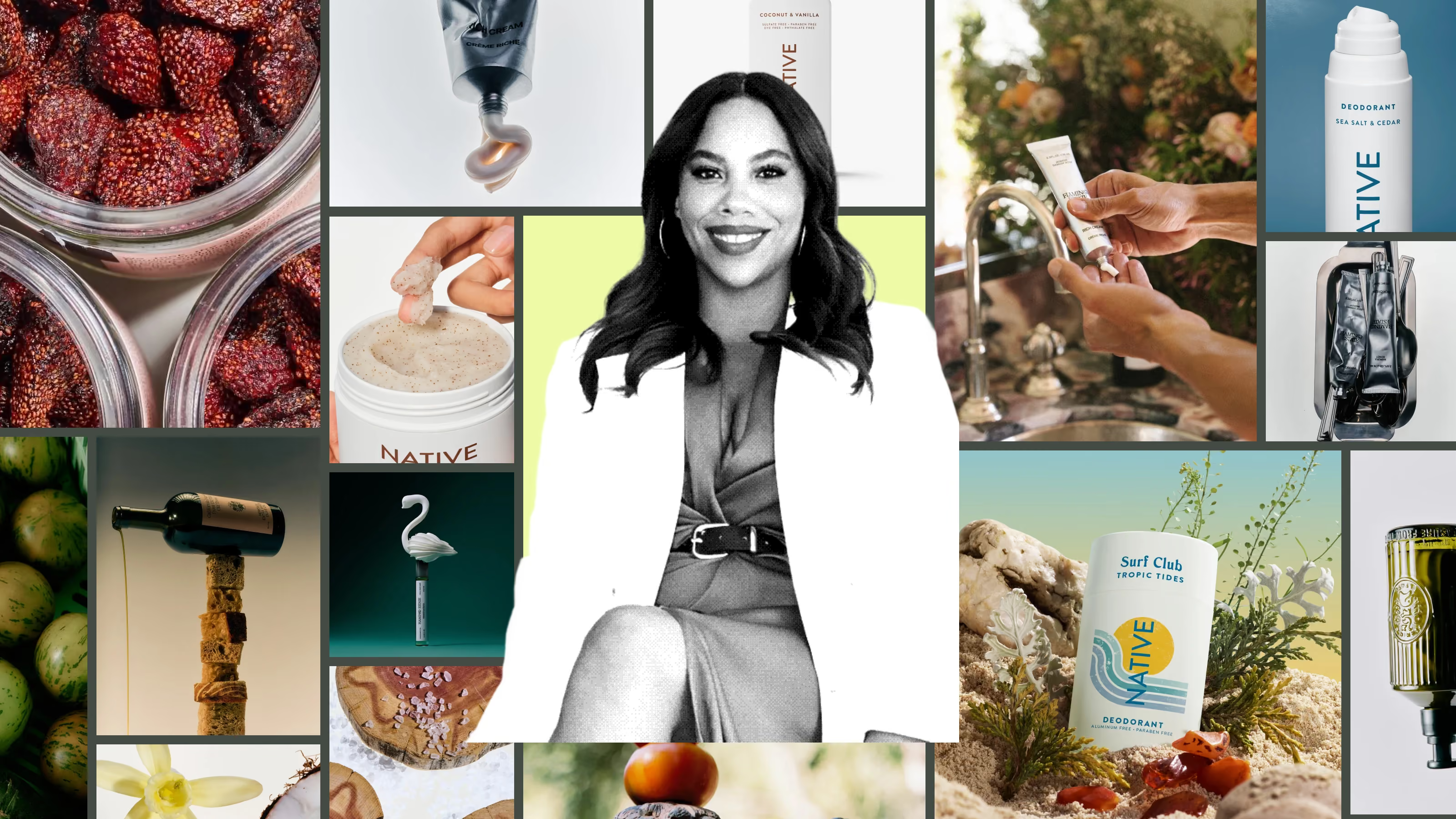
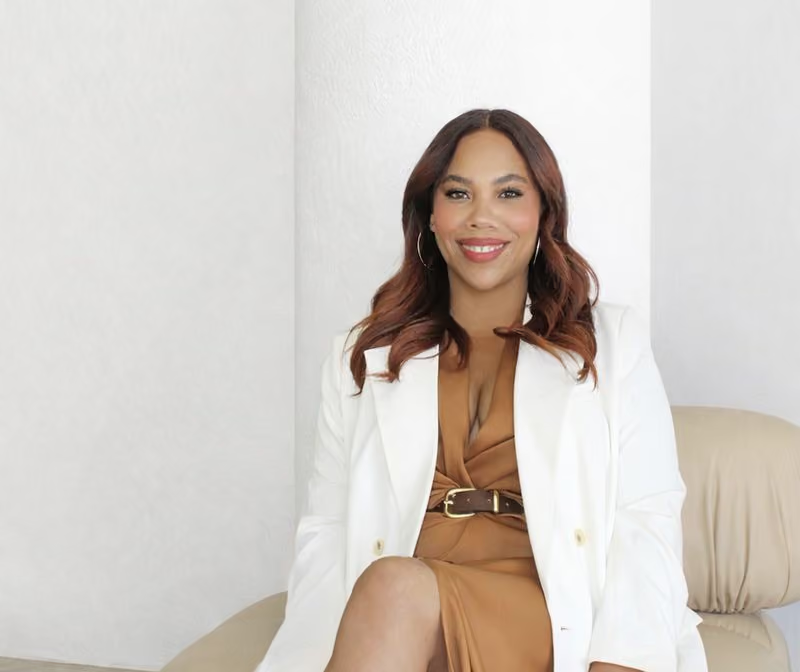
Angela Ubias is an exited founder, operator, and product innovator with 13 years of experience building consumer brands. She has been part of multiple successful exits — including Native Deodorant's acquisition by P&G and the sale of her own brand, Common Heir, to Flamingo Estate in 2024. Her work spans product development, commercialization, retail expansion, and brand strategy across more than 50 beauty and wellness brands.
You've worked across a lot of brands at different stages. What's the most common mistake you see founders make when it comes to product launches?
Launching too quickly.
And ironically, it's often their biggest competitive advantage working against them.
Smaller brands can move faster than almost anyone. Faster than legacy players, faster than retail partners expect. That agility is real and valuable. But because they can move quickly, they often do, before the idea has been pressure-tested against the business or the customer.
I've watched teams spend months developing a beautiful product, obsessing over every detail, investing heavily in packaging and marketing, only to realize they never validated whether their customer actually wanted it. The product was excellent. But the timing, the role, the commercial case… those were never interrogated.
Speed is only an advantage when you're moving toward something validated. Otherwise you're just failing faster.
How should founders be thinking about what to launch and when?
I'd push them to stop asking 'what's our next launch?' and start asking 'what is the role of this launch?'
That reframe changes everything. Because a launch that's meant to acquire a new customer segment looks completely different from one that's meant to reactivate lapsed customers, or increase AOV, or give a retail partner a reason to expand your shelf space. Same mechanics on the surface, completely different strategy underneath.
The other thing I'd add is that one of the most underrated skills in product is knowing when not to launch. The brands building sustainable growth are the ones making intentional decisions about which opportunities actually deserve resources, shelf space, and internal attention, not just the ones with the most SKUs.
Where should product ideas actually come from?
Everywhere, but with discipline about what you do with them.
Some of the best product ideas I've seen started in a brainstorming session. Creative exploration matters. But the real signal comes when a brainstorm idea overlaps with actual customer data. What are customers asking for repeatedly? What are they hacking together themselves? What are retail buyers telling you is missing from your assortment?
Founders, product developers, marketers, customer service teams, sales… they all see different pieces of the puzzle. The brands I respect most create forums for those voices to come together, and then they pressure-test the ideas that emerge against real signals.
Trend forecasting has a role too, but it should inform, not drive.
The question isn't 'what's trending?' It's 'what's emerging culturally that will influence our customer's behavior six months from now, and does it intersect with something we're already seeing in our data?'
Let's talk about the development process. What do founders consistently underestimate?
The distance between a great idea and a launchable product.
There's a fairly universal path: identify the opportunity, build a brief, develop the product, refine packaging, align suppliers, forecast inventory, bring it to market. What varies is everything in between. And in my experience, a product almost never launches exactly as originally envisioned.
A formula becomes too expensive. Packaging doesn't perform the way you hoped. Lead times shift. MOQs create constraints you didn't anticipate. A supplier misses a deadline. These aren’t exceptions; they’re a regular part of the process.
The founders who navigate it best are the ones who stay flexible without losing the core of what they were trying to make.
The other thing I'd say is: think about margins earlier than feels natural.
It's easy to fall in love with a product. It's much harder to build a profitable business around it.
Before development gets too far, you need to understand your target retail price, your channel mix, your margin requirements. Build your COGS target backward from those realities. It saves enormous time, money, and frustration later.
Can you talk about what resources a brand should invest in a product launch, and if that differs across different types of launches?
The launch should follow the role.
A hero launch is for a product that can materially shift the business: a new category, a major retail expansion, a repositioning moment, something with genuine revenue driver potential. It justifies deeper inventory, a fuller campaign, creator support, PR, retail education, founder visibility.
A drop serves a different purpose: cultural relevance, urgency, community engagement, rewarding your most loyal customers with something limited and special. It relies more on scarcity, timing, and community than on spend.
A quiet add-to-line is different again. Sometimes a product simply strengthens the assortment, improves the customer experience, or gives retail partners a more complete story. That product is probably better served by merchandising, bundling, email, SMS, and existing customer behavior, not a campaign.
Where I see premium brands get into trouble is treating every launch like a hero moment.
Desire is built through hierarchy. If every SKU gets a stage, you lose the storyline. Scarcity and aspiration are powerful levers, but only when used with intention.
Walk us through a launch process you're proud of and one that taught you the most.
The one I'm proudest of is Common Heir's retinol serum.
The brief was to create one of the first clean, melanin-safe, high-performing retinoids in market, effective enough for experienced skincare customers, approachable enough for sensitive skin and retinoid newcomers. The bet was that retinol didn't need to feel intimidating or clinical to be taken seriously.
The hard moment came during clinical testing. We had enough data to move forward with fair to medium skin tones, and from a purely commercial standpoint, we could have launched to meet retailer timelines and revenue expectations.
But the product thesis depended on deeper proof. Common Heir's customer didn't just want to be included in the campaign, they wanted to see themselves in the evidence, the before-and-afters, the education. For a retinoid product where sensitivity, irritation, and hyperpigmentation were central to the purchase decision, launching without stronger deep skin tone representation would have weakened both the claim and the trust behind it.
So we held the launch. That was not an easy short-term decision. But it was the right one.
What I'd do differently is pressure-test clinical recruitment and representation much earlier, especially for any product where inclusivity or skin tone safety is central to the claim structure. The product brief has to extend all the way through testing, proof points, education, and launch readiness. It can't stop at formulation.
The launch that taught me the most was Flamingo Estate's All Over Rich Cream, specifically because I inherited it midstream.
The brand already had a strong world around fragrance, pantry, garden, and lifestyle. This product was moving them into facial-adjacent skincare, which needed to feel credible and elevated without losing what made Flamingo Estate feel like Flamingo Estate. The challenge was that we had existing purchase order commitments from major retail partners while still managing final testing, packaging fixes, margin adjustments, and claims copy.
The team had been operating in silos, so a large part of the work was creating connective tissue between product, creative, operations, production, and commercial. We ultimately pushed the retail launch to address packaging issues rather than compromise the customer experience. We also adjusted pricing to support healthier margins given the specialty ingredients involved.
What I'd do differently is establish clearer decision rights and stage-gate alignment before retail commitments are locked. When a brand is moving into a more technically demanding category, the brief has to include claims, testing, packaging risk, margin architecture, and partner communication from day one, not just the creative vision.
Last question: if a founder is about to launch something, what's the one question they should be able to answer before they do?
What is the role of this launch, and have I resourced it accordingly?
Not 'is this a good product?' Most founders launching something believe in it. The harder questions are: why does this product deserve to exist in the business right now, what does it need to do commercially, and have I given it what it actually needs to succeed… or am I hoping the product carries the launch on its own?
Get the best in intelligence to your inbox.
- Operator insights on the tactics and systems driving modern e-commerce growth.
- Clear analysis of the shifts shaping modern e-commerce.
- Unfiltered conversations with the people actually building great brands.
Your submission has been received!
Create a free account to continue reading
Get access to intelligence from e-commerce's top operators with a free Starters account.
Continue reading with a Starters subscription
Get unlimited access to The Starters` exclusive reporting and ad-free intelligence for just $249/month